How Industrial Automation is Revolutionizing Aerospace Component Manufacturing
The Role of Industrial Automation in Aerospace Manufacturing
Overview of Industrial Automation
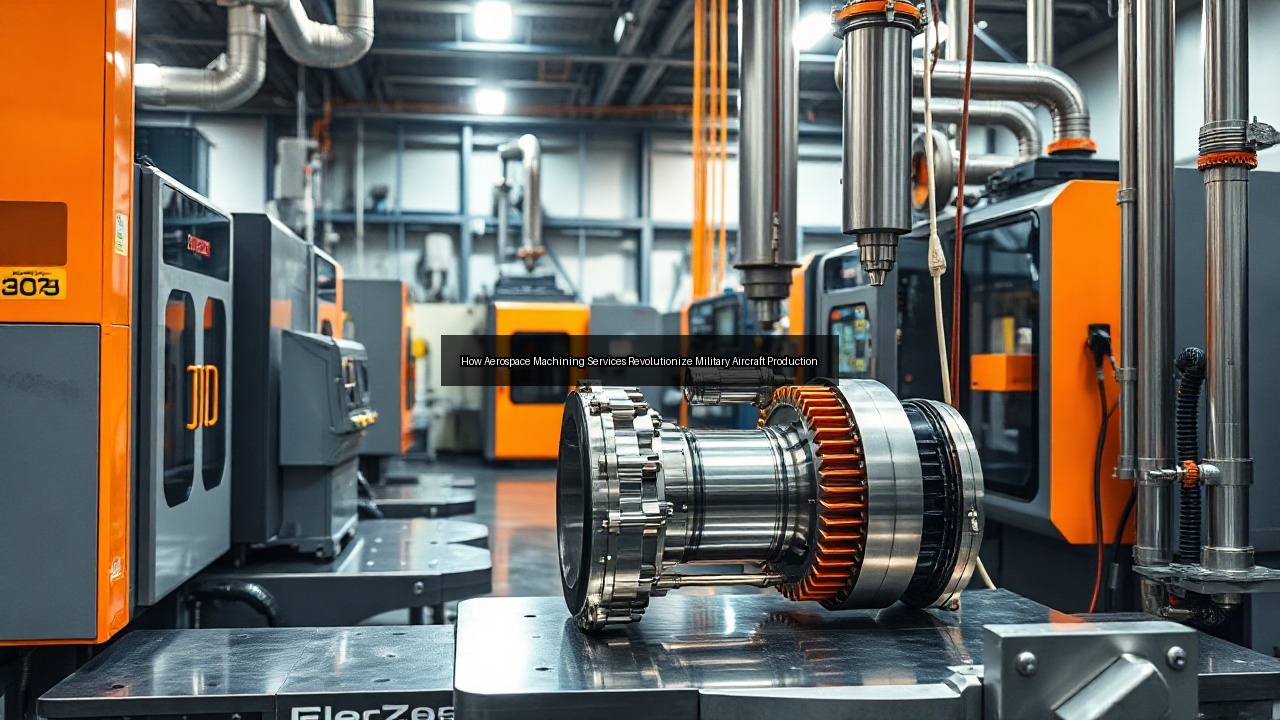
Industrial automation drives aerospace component machining by deploying robotic systems, computer-controlled equipment, and integrated software that handle repetitive tasks with consistent output. Machinists now oversee these streamlined processes rather than performing every manual step, which accelerates production cycles for complex aerospace parts. This shift supports the aerospace industry as demand grows for lighter, stronger components that meet strict performance standards.
Systems integrate sensors and feedback loops to monitor operations in real time, allowing immediate adjustments during milling or turning. Aerospace machining services benefit directly because automation reduces human error while maintaining tight tolerances required for flight-critical hardware. Engineers program sequences that repeat flawlessly across batches of aluminum or titanium parts, creating reliable throughput without constant supervision.
Benefits of Automation in Aerospace
Automation delivers faster turnaround times and lower scrap rates in aerospace machining services, directly improving cost efficiency for manufacturers. Precision and accuracy rise when machines execute identical paths every cycle, eliminating variations that once appeared in hand-guided work. The aerospace industry gains capacity to produce higher volumes of military aircraft components and commercial aircraft fittings without sacrificing quality.
Workers experience safer environments because heavy lifting and exposure to cutting fluids decrease. Data collection from automated lines feeds into predictive maintenance schedules, preventing unexpected downtime that previously disrupted aerospace component machining projects. Overall output quality improves because every machined surface meets documented specifications before leaving the cell.
Comparison of Traditional vs. Automated Machining
Traditional machining relied heavily on skilled machinists manually adjusting feeds and speeds, which introduced variability across shifts. Automated setups using CNC machining execute pre-verified toolpaths that hold tolerances within microns on every part. Aerospace machining services that adopted automation report fewer rejected castings and reduced rework on engine housings.
Setup times drop dramatically when operators load programs instead of recalibrating fixtures by hand. Production of stainless steel brackets or cobalt alloy fittings now runs continuously with minimal intervention. The contrast appears most clearly in repeat orders where automated cells maintain identical geometry across hundreds of spacecraft brackets or UAV structural members.
Key Technologies in Aerospace Machining Services
CNC Machining: Precision and Efficiency
CNC machining forms the backbone of modern aerospace machining services because multi-axis centers perform complex contours in single setups. Five-axis milling removes material from titanium billets to create contoured fuselage frames while maintaining wall thicknesses measured in fractions of a millimeter. Tool changers and pallet systems keep spindles running without long pauses between operations.
Programmers optimize toolpaths to reduce air cuts and extend cutter life on aluminum and stainless steel workpieces. Real-time monitoring tracks spindle loads and vibration, automatically slowing feeds when conditions threaten surface finish. These capabilities allow aerospace component machining teams to deliver finished parts faster than legacy methods permitted.
Advanced Materials: Titanium, Aluminum, and Cobalt
Titanium alloys resist extreme temperatures yet demand specialized tooling and coolant strategies during aerospace machining services. Aluminum remains popular for weight-sensitive structures because it machines quickly and accepts tight tolerances after heat treatment. Cobalt-based superalloys appear in hot-section engine components where oxidation resistance outweighs machinability concerns.
Manufacturers combine these metals in hybrid assemblies that undergo sequential milling and turning operations. Proper chip evacuation and rigid fixturing prevent deflection that could compromise precision and accuracy on thin-walled aircraft parts. Aerospace machining services that master these materials gain competitive edges on contracts requiring both strength and minimum mass.
The Importance of Tool Steel in Manufacturing
Tool steel cutters and dies withstand the forces encountered when machining iron-rich alloys and hardened stainless steel components. Aerospace machining services select grades with high wear resistance to maintain edge sharpness across long production runs of missile fins or landing gear fittings. Heat-treated tool steel also forms the basis for custom fixtures that locate parts accurately during secondary operations.
Proper selection and maintenance of tool steel directly influence cycle times and surface integrity. Machinists inspect edges regularly and replace inserts before dimensional drift occurs. This discipline supports consistent output quality demanded by the aerospace industry for both flight hardware and ground-support equipment.
Applications of Automated Machining in Aerospace Components
Machining Military Aircraft Parts
Military aircraft structures require pockets, ribs, and attachment points machined from high-strength aluminum and titanium plates. Automated cells equipped with large gantry mills produce these parts at rates that satisfy urgent defense schedules. Aerospace machining services apply probing routines to verify datum locations before metal removal begins, ensuring every feature aligns with assembly tolerances.
Stealth coatings adhere best to surfaces finished to exact roughness values, which CNC programs control reliably. Machinists monitor coolant concentration and tool wear to prevent subsurface damage that could reduce fatigue life. The resulting components meet the rigorous inspection criteria set by military procurement standards.
Creating Engine Components: Turbine Blades and Castings
Turbine blades start as near-net-shape castings that undergo precision milling to establish airfoil profiles and cooling passages. Aerospace machining services use five-axis CNC machining to reach internal features while preserving thin walls that manage thermal loads. Cobalt and nickel alloys demand ceramic inserts and controlled parameters to avoid work hardening during cutting.
Engine casings and manifolds receive similar automated treatment, with milling operations creating mounting flanges and sealing surfaces. In-process gauging confirms critical dimensions before parts move to balancing or coating stations. This integrated approach shortens lead times for complete engine assemblies.
Manufacturing UAV and Spacecraft Components
UAV airframes often combine machined aluminum spars with composite skins, requiring accurate mating surfaces produced on CNC mills. Aerospace machining services also fabricate titanium brackets and steel fasteners that secure avionics bays against vibration. Automated deburring stations remove sharp edges that could damage wiring harnesses during flight.
Spacecraft components follow comparable workflows, with additional emphasis on cleanliness and outgassing properties. Machining of space architecture elements such as satellite frames demands low-distortion fixturing to preserve optical alignment features. Precision and accuracy achieved through automation enable reliable deployment once vehicles reach orbit.
Enhancing Reliability and Accuracy in Aerospace Manufacturing
Quality Control in Automated Systems
Automated inspection stations equipped with coordinate measuring machines verify every critical dimension on machined aerospace parts before release. Aerospace machining services integrate these checks into the workflow so deviations trigger immediate program corrections. Statistical process control tracks trends across batches, highlighting tool wear or fixture movement before parts fall outside specification.
Operators review digital reports rather than hand-written logs, reducing transcription errors. Laser scanners capture freeform surfaces on turbine blades and UAV wings for comparison against CAD models. This closed-loop approach sustains the high reliability expected in aerospace component machining.
The Role of Semiconductors in Precision Engineering
Semiconductors power the motion controllers and sensors that maintain sub-micron positioning in CNC machining centers. Aerospace machining services depend on these electronics for stable servo performance during high-speed milling of thin aluminum skins. Temperature-compensated circuits prevent drift that would otherwise affect precision and accuracy on long titanium runs.
Advanced drives adjust torque in milliseconds when cutting forces spike near cobalt castings. Redundant power supplies and signal shielding protect against electromagnetic interference common in busy manufacturing floors. Reliable semiconductor performance underpins the repeatability that defines successful aerospace machining services.
Ensuring Reliability in Aerospace Components
Every machined aircraft bracket, engine mount, and spacecraft fitting undergoes material certification and nondestructive testing before installation. Aerospace machining services document tool traceability and process parameters so failures can be traced to specific operations. This discipline protects flight safety and supports certification for new designs.
Regular calibration of machine tools and inspection equipment maintains the chain of accuracy from design to finished part. Machinists participate in root-cause analysis when anomalies appear, feeding lessons back into program refinements. The resulting components demonstrate the reliability demanded by both commercial and defense aerospace applications.
Future Trends in Aerospace Machining and Automation
The Impact of AI and Machine Learning
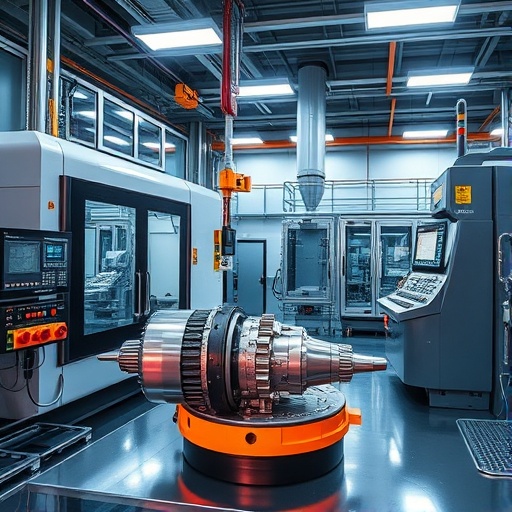
AI algorithms analyze sensor data from CNC machining centers to optimize feeds and speeds in real time for titanium and aluminum workpieces. Aerospace machining services that implement machine learning reduce cycle times while extending tool life on difficult cobalt alloys. Predictive models forecast when cutters will reach wear limits, allowing scheduled changes that avoid scrap.
Adaptive control systems adjust paths on the fly when material hardness varies within a casting. Engineers review summarized insights rather than raw logs, accelerating process improvements. These capabilities position aerospace component machining providers to handle increasingly complex geometries with greater efficiency.
Sustainable Practices in Aerospace Manufacturing
Automated chip management and coolant recycling systems cut waste generated during aerospace machining services. Dry or minimum-quantity lubrication techniques reduce environmental impact while preserving surface quality on machined steel and stainless steel parts. Energy-efficient motors and regenerative drives lower power consumption across milling and turning cells.
Manufacturers select recyclable aluminum and titanium alloys that retain value after end-of-life aircraft disassembly. Process optimization software minimizes air cuts and reduces overall material removal, conserving resources. These practices align aerospace machining services with broader industry goals for lower emissions and responsible material use.
Emerging Materials and Technologies
New high-entropy alloys and ceramic-matrix composites challenge traditional tooling but offer performance gains in engine and airframe applications. Aerospace machining services explore ultrasonic-assisted milling and laser-assisted turning to machine these materials without excessive tool wear. Hybrid additive-subtractive platforms build near-net shapes then finish critical surfaces in one automated sequence.
Integration of in-machine metrology with digital twins allows virtual verification before physical cutting begins. Machinists collaborate with software specialists to refine strategies for missiles, UAV structures, and next-generation spacecraft. Continued advancement keeps aerospace machining services at the forefront of engineering innovation.
See Also
- The Art and Science of Machining Turbine Blades for Military Aircraft
- Exploring Space Architecture through Advanced Aerospace Machining Techniques
- Militarizing the Skies the Importance of Reliable Aerospace Machining Services
- Unlocking Precision in Aerospace Machining for Cutting-Edge UAV Technologies